 blog
blog
Commercial Moving Company: What to Know
Table of Contents
- What a Commercial Moving Company Does
- Types of Commercial Moves and Services
- Office Relocation Checklist: Planning Your Move
- Commercial Moving Cost Estimate: What Factors In
- Business Relocation Timeline: How Long It Takes
- How to Choose a Reliable Commercial Moving Company
- Storage Solutions and IT Migration for Businesses
- Frequently Asked Questions
Last Updated: October 3, 2026
What a Commercial Moving Company Does
A commercial moving company specializes in relocating businesses of all sizes, from small offices to large warehouses and retail locations. Unlike residential moves, commercial relocation requires specialized expertise in handling office equipment, furniture, and sensitive operations with minimal downtime.
At Coastal Moving Systems, we understand that a business move isn't just about transporting boxes. It's about keeping your operation running smoothly during the transition. Our team handles everything from disassembling and reassembling office furniture to coordinating logistics for long-distance relocations.
The scope of commercial moving services extends beyond simple transportation. A full-service commercial moving company typically offers packing, unpacking, furniture assembly, equipment setup, and even junk removal.
Types of Commercial Moves and Services
Commercial relocation comes in several forms, each with distinct requirements and challenges. Understanding the type of move you need helps you select the right commercial moving company for your situation.
Office Furniture Disassembly and Reassembly
Office furniture disassembly and reassembly is one of the most time-consuming aspects of any commercial move. Modern office setups often include modular desks, filing systems, cubicles, and ergonomic seating that must be carefully taken apart, transported, and reconstructed at the new location.
Professional crews know how to handle this efficiently. They understand which pieces need to be disassembled, what hardware and fasteners to preserve, and how to protect surfaces during transport.
The real value here is speed and accuracy. When your team can't access their desks and equipment, productivity stops. A commercial moving company with experience in furniture assembly gets your workspace functional quickly, often within hours of arrival at the new location.
Full-Service Packing and Unpacking
Full-service packing and unpacking takes the burden entirely off your shoulders. Rather than asking your staff to box up files, equipment, and supplies, professional movers handle everything.
This service is particularly valuable for businesses with sensitive documents, delicate equipment, or large volumes of supplies. The packing process includes wrapping, padding, and securing items to prevent damage during transit. Upon arrival, the moving team unpacks, positions items, and removes all packing materials.
Many businesses find that the time saved by outsourcing packing and unpacking justifies the cost. Your employees stay productive at the old location right up until move day, then return to a fully organized new workspace.
Local vs. Long-Distance Relocation
Local moves typically stay within a 50-mile radius and can often be completed in one or two days. Long-distance moves require more planning, coordination, and time. They may involve crossing state lines, navigating different regulations, and managing extended timelines.
A reliable commercial moving company handles both types differently. Local moves allow for flexibility and quick turnarounds. Long-distance relocation demands advance scheduling, detailed inventory management, and often temporary storage solutions if your new space isn't ready when the truck arrives.
Long-distance moves also involve different insurance considerations and regulatory requirements. Make sure your moving partner understands interstate commerce rules and carries appropriate liability coverage for cross-state relocations.
Office Relocation Checklist: Planning Your Move
Successful commercial relocation requires systematic planning. An office relocation checklist ensures nothing gets overlooked and keeps all stakeholders aligned throughout the process.
Start by notifying your landlord and property management at both locations. Most commercial leases require advance notice of move-out dates.
Inventory your current space thoroughly. Document what's staying, what's being discarded, and what's being moved. This inventory becomes the foundation for your moving estimate and helps your commercial moving company plan logistics and truck requirements.
Coordinate with your IT department early. Server migration, phone system setup, and network configuration require advance planning. Schedule these services to align with your physical move.
Create a detailed timeline with specific dates for packing, moving, setup, and reopening. Identify which departments or functions can move first and which must move last to maintain operations.
Finally, prepare your new space. Ensure parking is available for moving trucks, elevators are reserved if needed, and building management knows your move date.
Commercial Moving Cost Estimate: What Factors In
Understanding what drives commercial moving costs helps you budget accurately and compare quotes fairly. Several factors influence the final price of your commercial moving company services.
The primary cost driver is the volume of items being moved. More furniture, equipment, and supplies require larger trucks, more crew members, and additional time.
Complexity adds cost. If your move involves disassembling and reassembling furniture, that's additional labor. Specialized equipment handling, such as moving servers or medical equipment, requires trained technicians and careful packing.
Timing affects pricing too. Moves during peak seasons (summer months) typically cost more than off-season relocations. Mid-week moves are often cheaper than weekend moves.
Insurance and liability coverage factor into estimates. A reputable commercial moving company carries comprehensive coverage to protect your assets during transit. This protection is reflected in pricing but provides crucial peace of mind.
Business Relocation Timeline: How Long It Takes
The timeline for a commercial move varies based on the size of your operation, distance, and complexity. Understanding realistic timeframes helps you plan your business transition effectively.
For a small office with fewer than 10 employees and minimal equipment, a local move can happen in one to two days. The planning phase typically takes two to four weeks. This includes selecting a commercial moving company, scheduling the move, notifying stakeholders, and organizing your current space.
Medium-sized offices (10-50 employees) usually require three to five days for the actual move, depending on how much disassembly and reassembly is needed.
Large commercial relocations, warehouses, retail locations, or multi-floor offices, can take one to two weeks for the physical move alone.
The IT migration timeline deserves special attention. Server relocation, phone system setup, and network configuration can take days to weeks, depending on your infrastructure complexity. Schedule these services to align with your physical move, but allow buffer time for testing and troubleshooting.
How to Choose a Reliable Commercial Moving Company
Selecting the right commercial moving company is one of the most important decisions in your relocation process. The wrong choice can result in damaged equipment, missed deadlines, and unexpected costs.
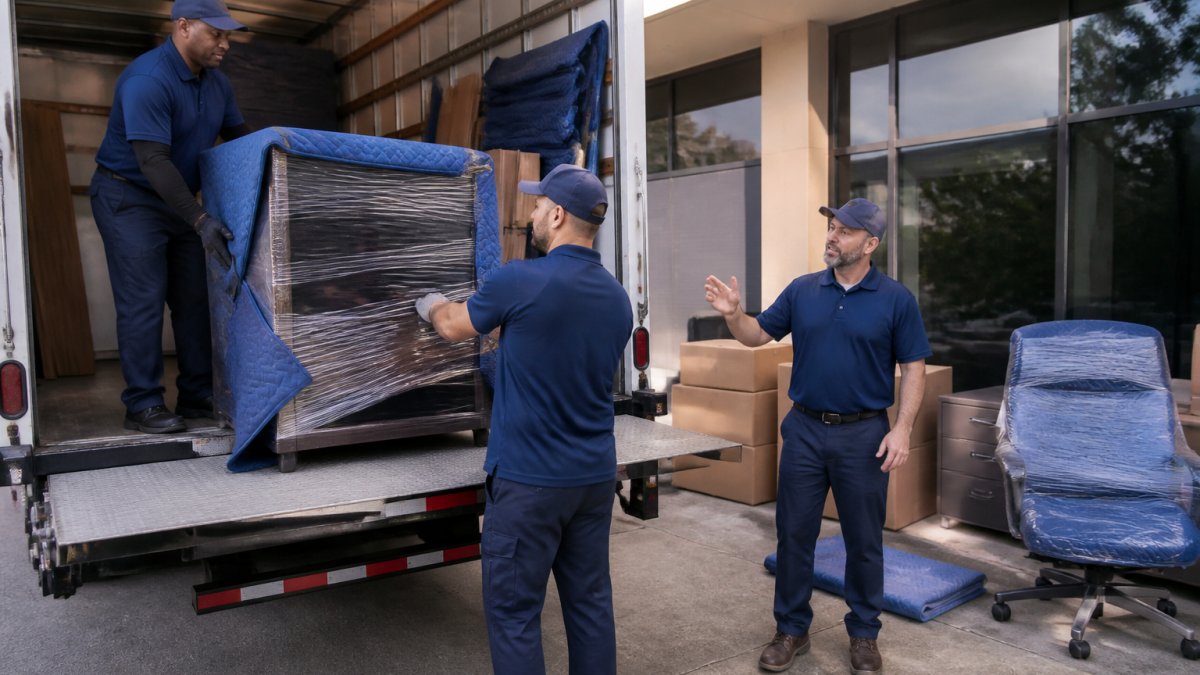
Start by verifying experience and credentials. Look for companies with at least five years of commercial moving experience.
Check licensing and insurance thoroughly. A legitimate commercial moving company carries federal Motor Carrier Safety Administration (FMCSA) registration and appropriate liability insurance.
Request detailed, itemized estimates from at least three companies. The estimate should specify labor costs, transportation fees, materials, and any specialty services.
Ask about their project management approach. How do they handle timeline coordination? What happens if something goes wrong during the move?
Insurance, Liability, and Regulatory Compliance
Insurance and liability coverage protect your business during the move. Understanding what's covered is essential before signing any contract.
Most moving companies offer two types of coverage: basic liability and full-value protection. Basic liability covers minimal damage, typically 60 cents per pound per item.
Verify that your moving company carries workers' compensation insurance for their employees. This protects you from liability if a crew member is injured during your move. Ask for a certificate of insurance naming your business as an additional insured party.
Interstate moves fall under federal regulations. The Federal Motor Carrier Safety Administration sets standards for interstate carriers. Your moving company should comply with these regulations, including proper licensing and insurance requirements. Ask about their compliance status before booking.
Red Flags to Avoid
Certain warning signs indicate a commercial moving company may not be reliable. Watch for these red flags when evaluating potential movers.
Companies that won't provide written estimates or ask for large deposits upfront are risky. Reputable movers give detailed written quotes and require only a reasonable deposit to hold your date.
Lack of verifiable references is a major concern. If a company can't provide contact information for recent commercial clients, that's a warning sign.
Poor communication is another indicator. If the company is hard to reach, doesn't return calls promptly, or seems disorganized during the quoting process, imagine what the actual move will be like.
Storage Solutions and IT Migration for Businesses
Many commercial relocations require temporary storage solutions.
Climate-controlled storage protects sensitive equipment, documents, and furniture from temperature and humidity fluctuations. This is especially important for electronics, servers, and archived records.
IT migration deserves its own planning process. Server relocation requires careful coordination with your IT team.
Many businesses schedule IT migration for after-hours or weekends to minimize downtime. Your moving partner should understand these timing constraints and coordinate with your technical team.
Relocating your business is complex, but partnering with an experienced commercial moving company makes the process manageable. At Coastal Moving Systems, we've spent over 40 years handling commercial relocations.
Frequently Asked Questions
What is a commercial moving company?
A commercial moving company specializes in relocating businesses, offices, warehouses, and retail spaces. Unlike residential movers, they handle specialized equipment, office furniture disassembly and reassembly, inventory management, and project coordination to minimize downtime. They manage logistics for local, regional, and long-distance moves while ensuring liability coverage and regulatory compliance for business assets.
How much does a commercial move cost?
Commercial moving cost estimates depend on several factors: distance, volume of items, complexity of equipment, disassembly and reassembly needs, and whether you need full-service packing. Some movers charge hourly rates; others quote flat fees. Storage solutions and specialized handling add to the total. Request a free quote from your moving company to get an accurate estimate based on your specific situation.
What questions should I ask a commercial moving company before hiring?
Ask about their experience with your type of move (office, warehouse, retail), whether they provide liability coverage and insurance, their project management process, timeline estimates, and how they handle tight building constraints like elevator reservations or narrow stairwells. Verify how long they've been in business, request references, and confirm their pricing structure upfront to avoid hidden fees.
How do I ensure my office equipment is protected during a move?
Choose a mover experienced in handling sensitive equipment and valuable items. Confirm they use proper protective materials, have trained crews, and understand IT and server migration protocols if applicable. Ask about their liability coverage limits, verify they'll document inventory, and consider requesting a walkthrough of your space before moving day so they understand your equipment and building constraints.